 129
HUHU
129
HUHU
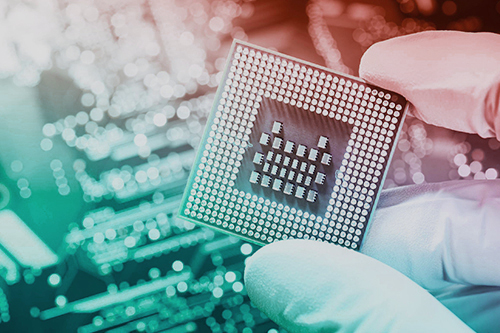
Russia's strategy of using its resource advantages as a weapon against Western economic sanctions is still ongoing, and this time it is the turn of inert gases, the core material for semiconductor production. On June 2nd, the Russian Ministry of Industry and Trade announced that it will impose export restrictions on inert gases such as neon, which are necessary for manufacturing semiconductors, by the end of this year, mainly targeting "unfriendly countries and regions". On the 4th, the Russian "Strategic Culture Foundation" website reported that the West had previously banned the export of advanced semiconductors, "sensitive equipment," and chemicals to Russia, and Russian chip manufacturers had also been sanctioned. This restriction measure may exacerbate the shortage of chip supply in the global market. Due to the instability of relevant production caused by the conflict between Russia-Ukraine conflict, the global neon price has soared recently, which puts pressure on semiconductor manufacturers in South Korea and other countries.
Essential raw materials for semiconductor production
According to the Russian financial website "1prime" on the 3rd, Alexei Boyko, an analyst at "MForum Analytics" in Russia, said, "Some people believe that Ukraine's neon gas exports account for 50% of the international market share, but in fact, these are purified from Russian neon gas." Boyko said that due to the lack of microelectronics industry in Russia, few Russian companies are engaged in the processing and production of high-purity inert gases. Therefore, in the international market, Russian companies usually sell inert gas mixtures (neon and krypton, krypton and xenon) to Ukraine first, and Ukrainian companies then produce high-purity gases from them and sell them abroad. Taiwan's "Central News Agency" said that Ukraine was once one of the world's largest suppliers of inert gas, but the outbreak of the Russia-Ukraine conflict in late February led to the suspension of production of the inert gas plants in the Ukrainian cities of Mariupol and Odessa in March. Russia's restrictions on inert gas exports may exacerbate supply shortages in the global chip market.
South Korea forced to pay high prices for gas
The most likely scenario is that some countries will purchase these key gases from China, but the price will be 20% to 25% higher than the inert gases produced by Russia. "Russian industry expert Khazanov analyzed that as another major producer of inert gases in the world, China has a huge steelmaking capacity, which is an important industrial foundation for producing inert gases. However, China may increase production mainly for its own needs and export this gas at record prices, which will affect the final product price increase.
According to the report of the South Korean Daily Economy on June 4, the South Korean semiconductor industry continued to import a large amount of neon gas from China after the outbreak of the Russia-Ukraine conflict, and at the same time strengthened its own capacity to manufacture rare gas in semiconductors. POSCO established neon gas production equipment in January this year and plans to start producing high-purity neon gas this year. Samsung Electronics and SK Hynix have also increased the amount of imported neon gas from China and are stockpiling it in advance. Currently, they have stockpiled neon gas for at least three months of use.
According to South Korean media, even though large semiconductor companies in South Korea have stockpiled neon gas inventory, the industrial characteristics of semiconductors require that production cannot be interrupted, so South Korean companies are still concerned about the shortage of neon gas. SK Hynix officials have stated that if the neon gas shortage persists, it will inevitably cause losses to the company. The research and equipment production related to production in South Korea are insufficient, so it is not easy to achieve localization of neon gas production.
Participate in sanctions against Russia, Taiwanese companies pay attention to trends
The Taiwan authorities have launched "economic sanctions" against Russia since March and have been listed as "unfriendly countries and regions" by Russia. Therefore, Russia's "gas cut-off" warning has drawn great attention from Taiwan's semiconductor industry.
TSMC, the world's largest semiconductor manufacturer, has been cutting off its chip supply to Russia since the end of February this year. As of June 5th, TSMC has not commented on Russia's regulation of inert gas exports. Taiwan's United Microelectronics Corporation responded that it has gradually increased its inventory of inert gases such as neon gas and will have no supply problems until next year. Liji Electric also stated that neon gas is only used in the laser process, and the usage is small. A small bottle may take one to two months to use, and the current inventory is about 9 months. In terms of orders and production this year, "there is no need to worry about gas shortage".
Industry researchers on the island suggest that the semiconductor industry should not face a chain break crisis, even if prices such as neon gas may rise, the impact on costs will be limited. Yang Ruilin, research director of the International Institute of Obstetrics and Gynecology at Taiwan's Industrial Technology Research Institute, said that Russia's restrictions on the export of inert gases may further reduce the supply of neon gas. However, suppliers may prioritize supplying semiconductor factories, so the semiconductor industry should not face a supply chain crisis. However, the demand for other livelihood and commercial markets may be delayed as a result. The supply chain of related markets such as data centers, mobile phones, and computers is relatively stable, but the shortage of chips for automotive and industrial use may intensify.
According to the data released by the International Semiconductor Industry Association (SEMI) on June 2, the semiconductor sales in the Korean and Taiwan, China markets from January to March 2022 are lower than the same period of the previous year, and the overall growth rate slows down. Chinese Mainland, the world's largest semiconductor market, grew 27% to US $7.57 billion. Japan grew by 15% to $1.9 billion. South Korea decreased by 29% to $5.15 billion, while Taiwan decreased by 15% to $4.88 billion, lower than the same period last year.